When gum tissue recedes and exposes the root surface, three problems follow: sensitivity, accelerating bone loss, and aesthetic compromise. Gum grafting reverses all three. At Ferrari Dental Clinic, laser-assisted gum grafting produces faster healing, more predictable coverage, and less post-operative discomfort than conventional scalpel-based grafting.
Gum Graft Procedures
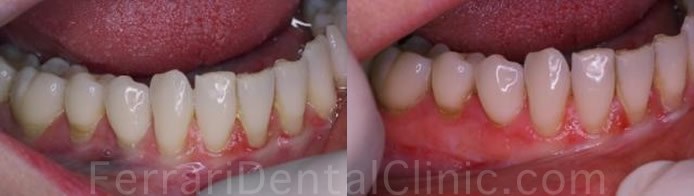
All 5 photos below are real clinical before & after cases treated at Ferrari Dental Clinic. Click any to view full size.
The gold standard for root coverage. A small piece of connective tissue is harvested from under the palate surface — leaving the outer layer intact — and transplanted to the receded site. The dual blood supply from both the recipient site and the graft itself produces highly predictable coverage results. Ferrari Dental Clinic uses laser-assisted technique at both the donor and recipient sites, reducing healing time and post-operative sensitivity at the palate compared to conventional harvesting methods.
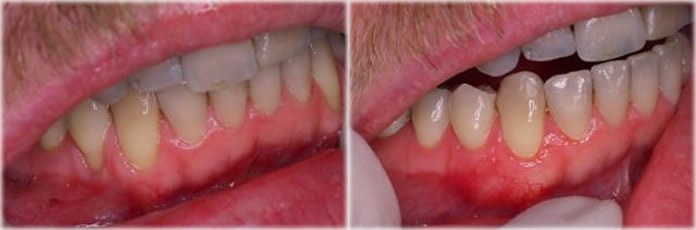
Used when the primary goal is to increase the band of attached, keratinised gum tissue rather than cover a recession. A thin layer of tissue is harvested from the palate and placed directly at the graft site to widen the zone of stable gum. This is particularly important around dental implants — inadequate attached gum around an implant leads to chronic inflammation and peri-implantitis over time. Free gingival grafting prevents this by establishing the biological gum band the implant needs for long-term stability.
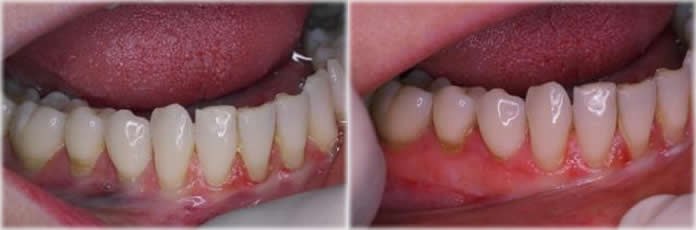
The tunnel technique is the most conservative root coverage approach — no incisions, no flap elevation. A small tunnel is created beneath the gum tissue without releasing it, and the graft material is threaded through. The intact gum over the graft maintains blood supply from both surfaces and produces excellent aesthetic integration. Post-operative swelling and discomfort are minimal. The tunnel technique is preferred for multiple adjacent recession sites where conventional flap surgery would require extensive tissue management.
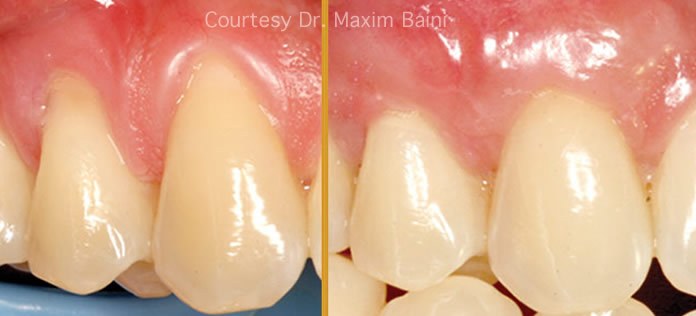
The Waterlase MD laser is used at Ferrari Dental Clinic to prepare both the donor site and the recipient bed for grafting. Laser preparation decontaminates the root surface of bacteria and biofilm before graft placement — a critical step that conventional mechanical preparation cannot replicate. The laser also seals the palatal donor site, significantly reducing bleeding and post-operative sensitivity at the harvest site. Most patients report minimal discomfort in the days following laser-assisted gum grafting compared to conventional technique.
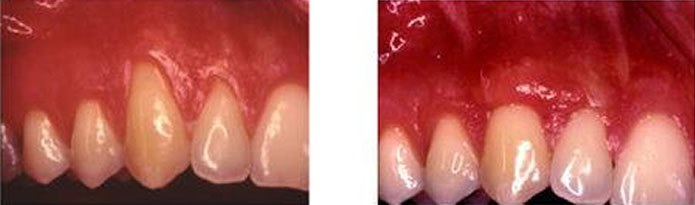
When recession affects multiple teeth across the lower or upper arch, a coordinated surgical plan treats all sites in a single session or staged sessions depending on extent. Full arch recession treatment restores uniform gum levels across all affected teeth, eliminating the aesthetic inconsistency of uneven gum heights and the sensitivity that accompanies widespread root exposure. Dr. Habib Zarifeh plans multiple recession cases with digital gum contouring to predict the final gum architecture before surgery begins.
Why Treat Gum Recession?
Gum recession does not stop on its own — it progresses. Each millimetre of recession exposes more root, increases temperature and pressure sensitivity, and accelerates the bone loss that follows gum loss. Left untreated, recession eventually leads to tooth mobility and tooth loss. The earlier grafting is performed, the less tissue needs to be replaced and the more predictable the coverage result.
Beyond the functional and protective reasons, gum recession has a significant aesthetic impact — exposed grey root surfaces make teeth appear elongated and aged. Gum grafting restores the natural tooth-to-gum proportion that gives a smile its balanced appearance. When combined with cosmetic restorations, gum grafting ensures the final result looks natural from the gum line to the tooth tip.